Can You Drive with Worn Brake Pads? How Long Is It Safe?
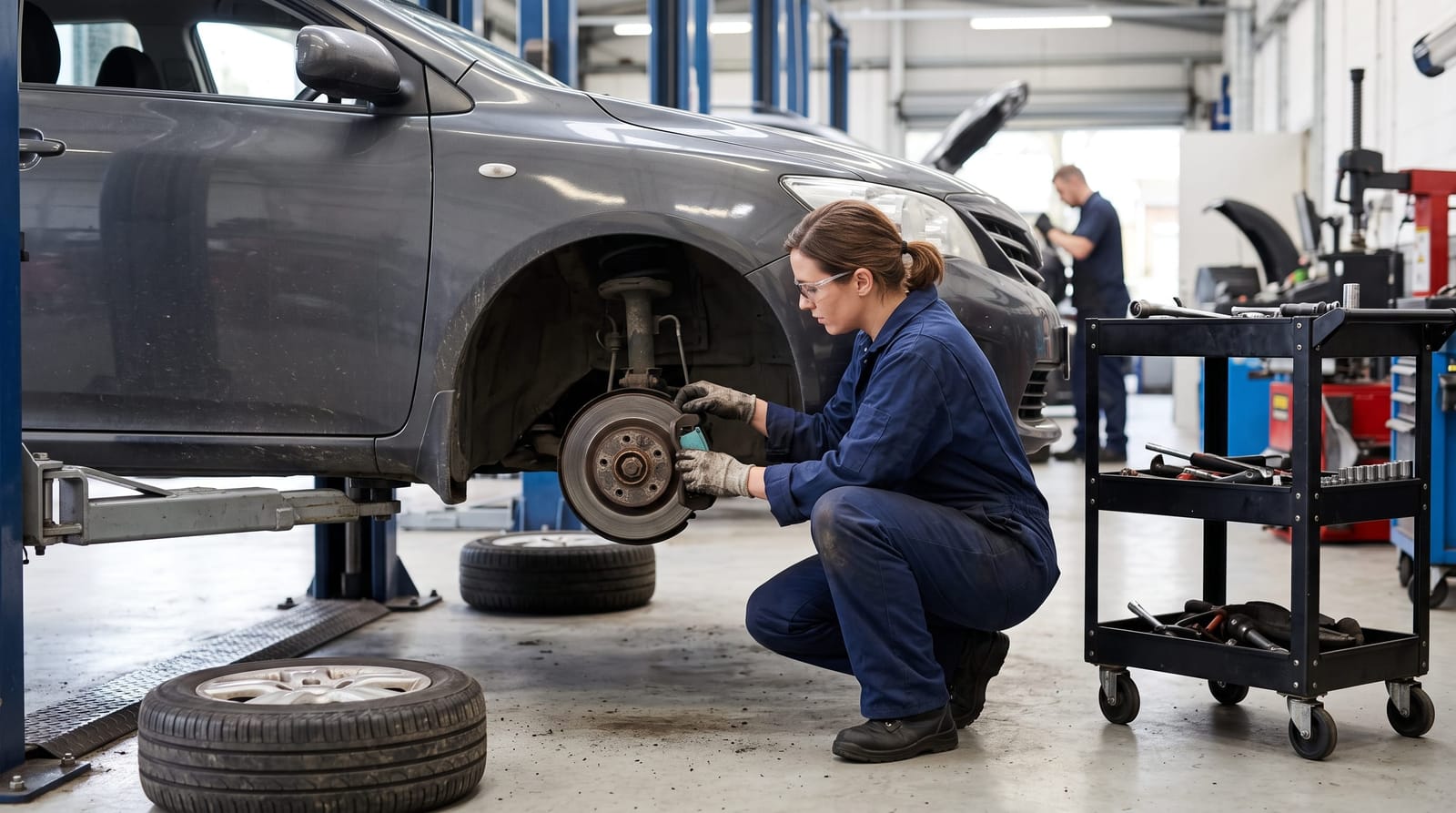
It's a question almost every driver asks at some point: can you drive with worn brake pads, at least for a little while? Maybe you noticed the squeal a week ago, or a shop mentioned your pads are getting thin. Life gets busy, and repairs cost money. But brake pads aren't like a burned-out cabin light: they sit between you and a potentially catastrophic stop. This article breaks down exactly what happens when you keep driving on worn pads, how quickly the situation escalates, and what the delay actually costs you in the end.
The Short Answer: It Depends on How Worn: But the Window Closes Fast
Not all brake pad wear is equal. A new brake pad typically starts at around 10-12mm of friction material. Most mechanics flag pads as "due soon" once they drop to about 4mm, and consider them critically worn below 2mm. That 2mm difference may sound minor, but it represents an enormous change in stopping performance and safety.
At 4mm, you're in "warning zone" territory. Your brakes still function, stopping distances are only marginally increased, and you likely have a few weeks of normal driving before things become urgent, though you should schedule a repair promptly.
At 2mm or below, you're in a different situation entirely. Stopping distances can increase by 20-30% compared to properly padded brakes, which at highway speeds can mean the difference between stopping safely and a collision. At this point, continuing to drive is genuinely risky, not just for you, but for other drivers and pedestrians around you.
Once pads wear completely through, often signaled by a harsh grinding or metal-on-metal screech, you're no longer braking with friction material at all. You're pressing bare metal caliper against your rotor with every stop. That's not just unsafe; it's a rapid path to a much more expensive repair.
What Actually Happens When You Keep Driving on Worn Brake Pads
The consequences of driving on worn brake pads follow a predictable and accelerating pattern. Understanding that progression helps explain why delays compound the problem.
Stage 1: Reduced Stopping Power
Even before metal-on-metal contact, thin pads generate less friction. In everyday driving this may feel subtle, but in an emergency stop it's significant. Studies on braking performance consistently show that vehicles with degraded brake components require considerably longer stopping distances: a critical factor in avoiding rear-end collisions, which account for roughly 29% of all traffic crashes in the U.S. according to NHTSA data.
Stage 2: Rotor Damage
Once pad material is gone, the metal backing plate grinds directly against your rotors. Rotors that could have been resurfaced for a modest fee can be destroyed within days of this contact beginning. A standard brake pad replacement might cost $150-$300 per axle depending on your vehicle, but replacing rotors adds another $200-$400 per axle on top of that. Ignoring worn pads doesn't save money: it multiplies the bill.
Stage 3: Caliper and Hardware Damage
Sustained metal-on-metal contact generates extreme heat. That heat can warp rotors, seize calipers, and damage brake lines. A seized caliper alone can cost $300-$800 to replace, and a warped rotor creates dangerous brake pedal pulsation, which some drivers notice as a soft or spongy pedal response. If you've been experiencing that symptom alongside wear concerns, it's worth reading about soft or spongy brake pedal causes as a related issue.
Stage 4: Complete Brake Failure
In the most serious cases, heat-damaged brake lines or a failed caliper can result in total loss of braking ability on one or more wheels. This is rare but real, and it is the logical endpoint of a chain reaction that starts with a worn pad and a delayed repair decision.
Stopping Distance: The Numbers That Matter Most
When people ask can you drive with worn brake pads, they often think in terms of convenience rather than physics. But stopping distance is a concrete, measurable consequence that puts the risk in perspective.
A vehicle traveling at 60 mph needs approximately 130-140 feet to stop under normal conditions with properly functioning brakes. With significantly worn or metal-on-metal brakes, that distance can increase by 20 feet or more: roughly the length of a full-size pickup truck. In a situation where a child runs into the street or a car stops suddenly in traffic, those extra feet matter enormously.
Wet or slick road conditions amplify this problem further. Worn pads lose friction capacity even faster on wet pavement, pushing stopping distances higher still. Jacksonville's frequent afternoon rainstorms make this a particularly relevant concern for local drivers.
The Real Cost of Waiting: Financial and Legal Context
Drivers often delay brake repairs to save money, but the math rarely works in their favor. Here's a realistic cost comparison:
- Pad replacement only (caught early): $150-$300 per axle
- Pads + rotor resurfacing (moderate delay): $250-$450 per axle
- Pads + rotor replacement (significant wear): $350-$700 per axle
- Pads + rotors + caliper replacement (severe neglect): $600-$1,100+ per axle
Every week of delay on worn-through pads can push you from the first category to the last. Beyond repair costs, there's also a liability dimension worth acknowledging. Driving a vehicle you know has compromised braking ability and being involved in an accident creates a situation with serious implications. Consult with a licensed legal professional if you have specific concerns about liability in your situation: this article is educational, not legal advice.
It's also worth noting that not every squeal means your pads are dangerously worn. Sometimes brakes squeal for other reasons entirely, if you're hearing noise but your pads look okay, understanding why brakes squeal when pads look fine can help clarify what's actually going on before assuming the worst.
How to Know Where Your Pads Actually Stand
Because pad thickness isn't something most drivers can easily see, here are the practical warning signs to pay attention to:
- Squealing or high-pitched noise: Most pads have a built-in wear indicator that squeals when the pad is around 2-3mm. This is your first reliable audio warning.
- Grinding or metal-on-metal scraping: This means the pad material is gone. Do not continue driving without having this inspected immediately.
- Vibration when braking: Often indicates rotor damage has already begun.
- Longer stopping distances or a "mushy" feel: Reduced stopping effectiveness is a direct sign of degraded pad function.
- Brake warning light: Some vehicles monitor pad thickness electronically. Take this light seriously.
If your vehicle is showing any of these signs, the right move is to have brakes inspected, not next month, but this week.
Frequently Asked Questions
How many miles can you drive on worn brake pads?
There's no universal mileage number because it depends on your driving style, road conditions, and how worn the pads already are. What matters more is thickness: at 2mm or less, you should treat brake service as urgent rather than convenient. Driving hundreds of additional miles on pads at this level significantly increases risk of rotor damage and reduced stopping ability.
What does it sound like when brake pads are worn out?
A high-pitched squeal during normal braking typically means you've hit the wear indicator: the pad still has a little material left, but not much. A grinding, scraping, or harsh metallic sound means the pad material is gone and metal is contacting metal. The grinding sound is the more urgent warning of the two.
Can worn brake pads cause an accident?
Yes. Worn brake pads increase stopping distances, reduce braking consistency in wet conditions, and, if they fail completely, can result in loss of braking control. Rear-end collisions are one of the most common types of crashes, and inadequate braking is a contributing factor in many of them. This is an educational observation, not a legal determination about any specific incident.
Is it safe to drive a short distance on grinding brakes?
Even a short distance on grinding brakes risks accelerating rotor damage significantly. If you're hearing grinding, the safest course of action is to avoid driving the vehicle and have it towed or inspected immediately rather than assuming a brief trip is low-risk.
Bottom Line: Can You Drive with Worn Brake Pads?
Technically, a vehicle with worn brake pads can be driven, but the window of "safe enough" is narrower and closes faster than most people expect. Mild wear gives you some time if you act promptly. Metal-on-metal contact gives you essentially none without rapidly increasing the danger and the repair bill. For Jacksonville drivers dealing with frequent stop-and-go traffic and rainy road conditions, functioning brakes aren't optional equipment. If you have questions about what your brakes actually need, a straightforward inspection is always the right starting point, and it's part of the broader commitment to brake repair and replacement you deserve to have answered honestly.