Why Are My Brakes Squealing But Pads Look Fine?
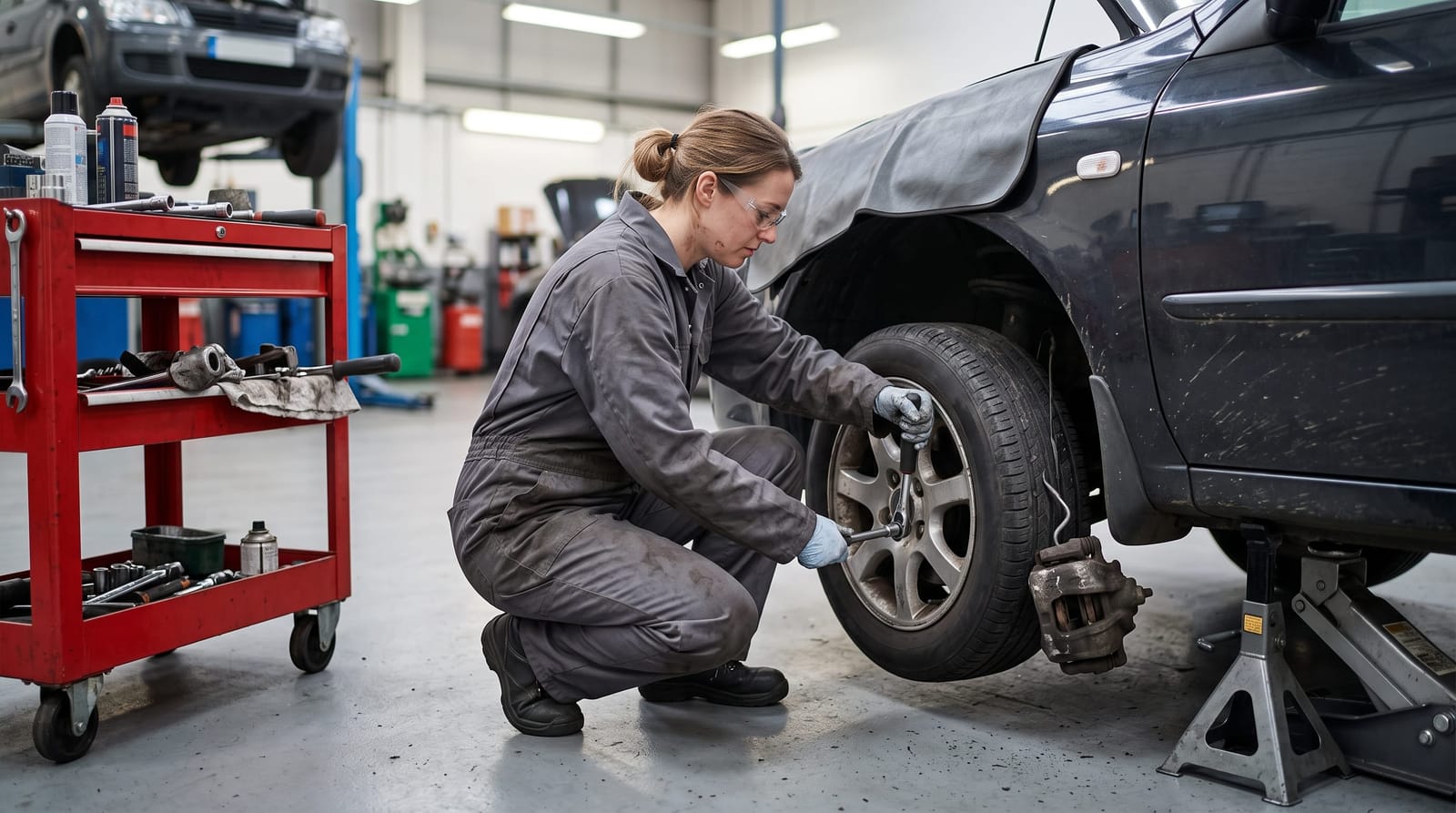
You crawl under the car, squint at the brake pads, and they look perfectly fine: plenty of material left, nothing obviously wrong. Yet every time you slow down, that high-pitched squeal is back. If this sounds familiar, you're not alone. Squealing brakes don't always mean worn pads, and that's the part most drivers miss. This post breaks down the real reasons your brakes are making noise even when the pads appear fine, so you know exactly what's happening and what to do about it: no guessing required.
Brake Squeal Isn't Always About Pad Thickness
Most drivers assume brake noise equals worn pads. That's a reasonable first guess, but brake pad thickness is just one piece of a more complicated puzzle. Brake systems involve metal rotors, calipers, pistons, hardware clips, and backing plates, and noise can come from any of them.
The wear indicator, that small metal tab designed to squeal when pads get low, typically activates when pads reach around 2-3mm of remaining material. If your pads are at 5mm or more, the indicator isn't the source. But that still leaves several other suspects. Understanding which one is causing your squeal can save you from unnecessary repairs and help you have a more informed conversation with your mechanic.
Here's the important thing: just because pads look fine visually doesn't mean the braking system is 100% healthy. Some causes of squealing are harmless and temporary. Others are signs that something needs attention before it turns into a bigger, and more expensive, problem.
Florida Humidity and Rotor Surface Rust
If you live in Jacksonville, this is one of the most common reasons your brakes squeal in the morning, and it's usually nothing to worry about. Florida's humidity is relentless. When your car sits overnight, especially after rain or in coastal air, a thin layer of surface rust forms on the iron rotors.
When you first start driving and apply the brakes, the pads scrub against that rust layer, producing a grinding or squealing sound that typically lasts anywhere from 30 seconds to 2 minutes of normal driving. Once the rust is cleared off, the noise disappears completely.
This is considered normal behavior for iron rotors in humid climates. However, if the squealing persists well beyond those first few stops, or if you notice a vibration or pulsing sensation in the brake pedal alongside the noise, that's a sign the rotor surface may have deeper issues, like scoring, warping, or uneven wear, that go beyond normal surface oxidation.
Glazed Brake Pads and Rotors
One of the sneakiest causes of squealing with "fine-looking" pads is glazing. Glazed pads happen when the brake pad material gets overheated and the surface hardens into a smooth, almost shiny finish. From a visual inspection, glazed pads can look perfectly normal: they have thickness, no cracks, no obvious damage. But they've lost their friction grip.
Common causes of pad glazing include:
- Frequent light braking on long downhill stretches without firm, intermittent stops
- A stuck or seized caliper keeping constant low pressure on the rotor
- Overheating from aggressive driving or towing without performance-rated pads
- Low-quality aftermarket pads with softer compound formulas
Rotors can glaze too. When a glazed pad runs against a rotor repeatedly, the heat transfers and creates a hardened surface on the rotor as well: turning a pad problem into a combined pad-and-rotor problem. The resulting squeal is often high-pitched and consistent, not just on the first stop of the day.
Cheap or Mismatched Aftermarket Brake Pads
Not all brake pads are created equal. Budget aftermarket pads sometimes use harder compounds or lower-quality friction materials that are more prone to vibration at certain temperatures. That vibration translates directly into a squeal, and since the pads still have plenty of thickness, they "look fine" on inspection.
This is worth knowing because it's a surprisingly common scenario. A driver gets a brake job done at a low-cost shop, saves a little money upfront, and then deals with persistent squealing for the next several months. The pads aren't worn: they're just the wrong pads for the vehicle or the driving conditions.
Additionally, pads installed incorrectly, such as inner and outer pads swapped on the same caliper, can squeal even when brand new. Proper installation matters as much as pad quality. If your squealing started shortly after a recent brake service, that's worth mentioning to whoever did the work.
Debris, Dust, and Missing Hardware
Sometimes the cause is straightforward: a small piece of road debris, a pebble, a bit of gravel, even hardened mud, gets lodged between the pad and rotor. The result is a grinding or squealing noise that can sound alarming but resolves on its own once the debris works itself loose. This type of noise tends to be inconsistent and may change with speed.
Brake dust buildup is another underappreciated culprit, particularly for drivers who don't rack up many miles and let brake material accumulate on rotor surfaces. A quick drive with a few firm (but safe) stops at low speed can sometimes clear this out.
Hardware is also worth mentioning. Brake systems include small anti-squeal shims, clips, and spreader springs that dampen vibration. When these components are worn, missing, or installed dry without proper lubricant on the contact points, metal-on-metal vibration creates noise. These parts are inexpensive, but they're sometimes skipped during budget brake jobs, and that's when the squealing starts.
When to Stop Waiting and Get It Inspected
Some brake squeal is temporary and harmless. Other noise is an early warning you shouldn't ignore. Here's a quick guide to reading the difference:
- Morning squeal that clears up in 60 seconds: Usually surface rust from humidity: normal in Florida
- Squeal only when braking lightly at low speeds: May be glazed pads or pad material mismatch
- Consistent squeal every time you brake: Warrants a full inspection: could be glazing, debris, or hardware issues
- Squeal accompanied by pulling to one side: Possible stuck caliper: get it looked at promptly
- Squeal plus a spongy or soft pedal feel: Brake pedal feel changes alongside noise could indicate a separate hydraulic issue worth investigating
- Grinding sound that replaced the squeal: This is a more urgent sign: something may have progressed beyond surface noise
If you're unsure whether your brakes are safe to drive on while you figure out the cause, understanding how long worn or compromised brake pads are safe to drive on can help you make a more informed decision about urgency. Similarly, if you're noticing any change in how your pedal feels alongside the noise, learning about soft or spongy brake pedal causes and fixes gives useful context for that specific symptom.
Frequently Asked Questions
Can new brake pads squeal?
Yes. Brand-new brake pads often require a break-in period, sometimes called "bedding", where the pad compound fully seats against the rotor surface. During this process, which typically takes between 200 and 400 miles of normal driving, light squealing is not unusual. If the noise persists beyond that or is very loud, the pads or installation should be checked.
Is it safe to drive with squealing brakes if the pads look fine?
It depends on the cause. Morning squeal from rotor rust in Florida humidity is generally not a safety concern and clears quickly. However, persistent squealing, especially combined with any changes in pedal feel, pulling, or vibration, is a signal to have the system inspected rather than ignored. A professional inspection is the only way to confirm whether it's safe to continue driving without repair.
Why do my brakes squeal in the rain?
Water on rotors and pads temporarily changes the friction characteristics of your brakes. The brief squealing you hear when braking in wet conditions is normal and typically resolves as the rotor surface dries from the friction heat of braking. Persistent noise in wet conditions that doesn't clear up may indicate a glazing or hardware issue worth checking.
Can I fix brake squealing myself?
Some causes, like applying brake lubricant to the correct contact points on the hardware or clearing surface debris, are straightforward. However, diagnosing glazed rotors, stuck calipers, or mismatched pad compounds requires disassembling the brake assembly and knowing what to look for. If you're not experienced with brake systems, having a qualified technician inspect the brakes is the safer path, both for accuracy and for your safety on the road.
The Bottom Line
Squealing brakes with pads that look fine is a genuinely confusing situation, but it's also a common one, especially in a humid climate like Jacksonville's. Surface rotor rust, glazed pad compounds, cheap aftermarket parts, missing hardware, or road debris are all legitimate explanations that have nothing to do with pad thickness. Some causes are harmless and self-resolving. Others are worth getting in front of before they develop into something more serious. If the noise is persistent, inconsistent with humidity patterns, or paired with any other change in how your brakes feel, a brake inspection gives you real answers instead of guesswork.