Do Rotors Need to Be Replaced with Brake Pads Every Time?
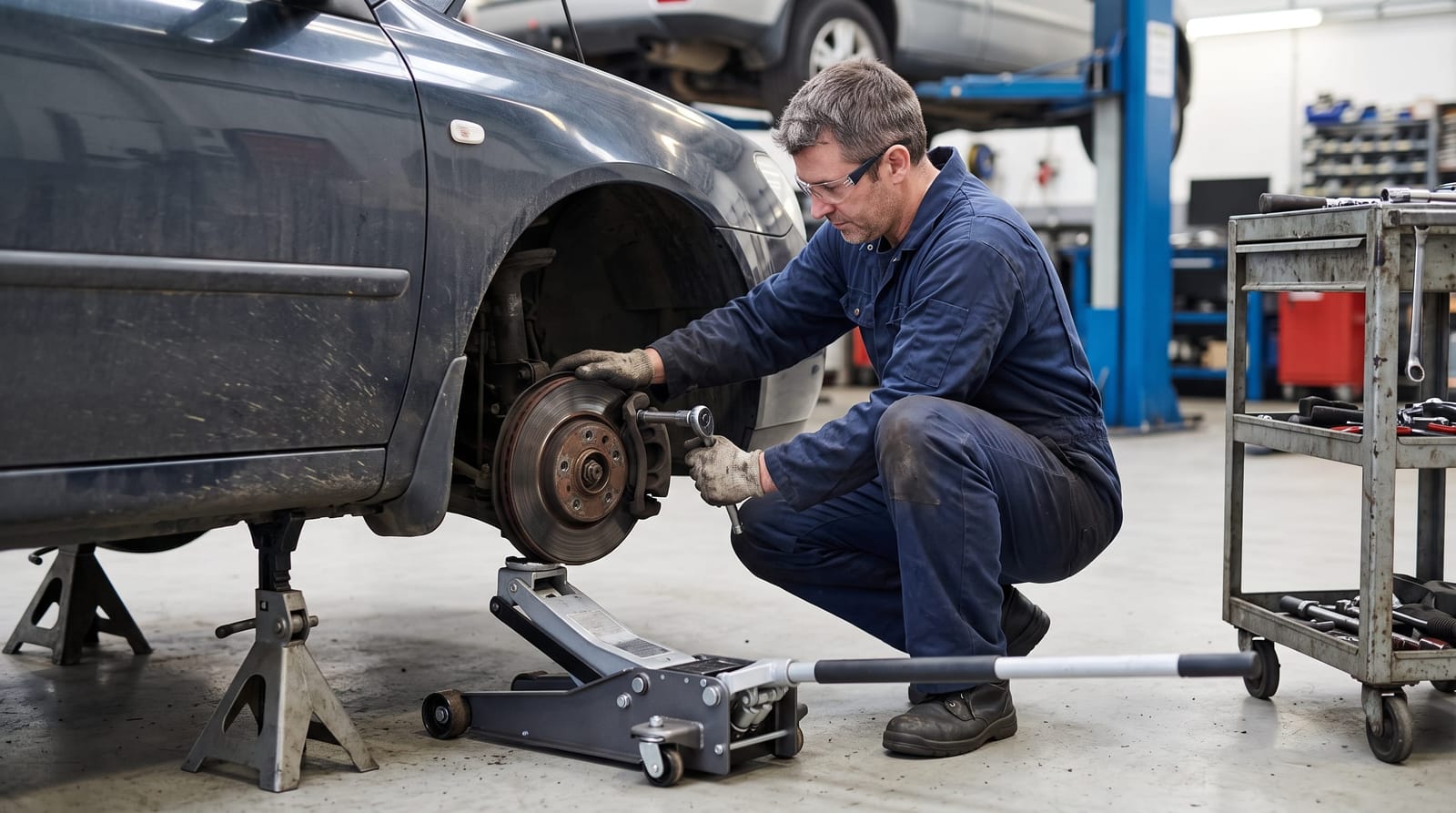
If you've ever taken your car in for a brake job, you may have heard a shop recommend replacing your rotors at the same time as your pads, and wondered whether that's truly necessary or just an upsell. It's one of the most common questions we hear from Jacksonville drivers. The honest answer? It depends. Rotors don't automatically need to come off every time you replace pads, but there are specific conditions that make replacement the right call. This post breaks it all down so you can make an informed decision about your vehicle's brake system.
Understanding What Rotors Actually Do
Before diving into the when-to-replace question, it helps to understand the rotor's role. Brake rotors are the large metal discs that sit behind your wheels. When you press the brake pedal, the calipers squeeze the brake pads against the rotors, creating friction that slows your vehicle down. That friction is what generates heat, and over time, that heat, combined with the physical wear of pad-to-rotor contact, takes a toll on the rotor surface.
Unlike brake pads, which are designed to wear down relatively quickly (think of them as the consumable in the system), rotors are built to last much longer. A quality set of rotors on a typical passenger vehicle can last anywhere from 30,000 to 70,000 miles depending on driving habits, vehicle weight, and the type of pads used. So no, they don't need to be replaced every time you change your pads, but they do need to be evaluated every time.
The Rotor Thickness Minimum: Why This Number Matters
Every rotor has a minimum thickness specification stamped directly onto the rotor itself or listed in the vehicle's service manual. This measurement, typically expressed in millimeters, represents the thinnest the rotor can safely be while still providing adequate braking performance and heat dissipation. Once a rotor wears below this threshold, it must be replaced, full stop.
As a general reference point, many passenger car rotors start out at around 28 to 30 mm thick and have a minimum thickness spec of roughly 24 to 26 mm. That gives a working wear margin of only a few millimeters before the rotor is considered unsafe. A technician will measure rotor thickness with a micrometer during a brake inspection to determine where your rotors fall relative to that minimum.
This is why rotor condition needs to be checked at every brake service, even if the rotors themselves look fine to the naked eye. Visual inspection alone won't tell you whether you're approaching or already past that minimum specification.
When Resurfacing Is a Viable Option
If your rotors are above the minimum thickness and don't have significant damage, resurfacing (also called "turning" or "machining") is often a legitimate option. A brake lathe shaves a thin, uniform layer off the rotor surface to restore smoothness and remove minor scoring or grooves left by worn pads. This can extend rotor life without the cost of full replacement.
However, resurfacing only works when there's enough material to remove. A rotor that starts at 28 mm and is currently measuring at 25.5 mm, with a minimum spec of 24 mm, may not have enough material left to safely machine. Removing even 0.5 mm during the resurfacing process could bring it dangerously close to or below the minimum. In those cases, replacement is the safer choice.
Resurfacing is most cost-effective on thicker, newer rotors with light surface wear. If your rotors are already nearing the end of their usable life, putting labor into resurfacing them only to replace them a short time later rarely makes financial sense.
Conditions That Require Rotor Replacement Regardless of Pad Life
There are situations where rotors must be replaced even if your brake pads still have usable material left. These include:
- Warped rotors: When rotors develop an uneven surface, often from overheating or rapid cooling, they cause a noticeable pulsation or vibration through the brake pedal. Warping is not always correctable through resurfacing, and a significantly warped rotor should be replaced.
- Deep grooves or scoring: If a brake pad wears down to the metal backing plate before being serviced, the metal-on-metal contact carves deep grooves into the rotor face. Grooves deeper than approximately 1.5 mm typically require replacement rather than resurfacing.
- Cracking: Hairline cracks on the rotor surface, particularly near the vents or hat, are a serious safety concern. A cracked rotor should always be replaced immediately.
- Excessive rust or corrosion: Surface rust is normal, especially in humid climates like Jacksonville's. But deep pitting or heavy corrosion that penetrates past the surface layer compromises rotor integrity and requires replacement.
- Below minimum thickness: As covered above, any rotor measuring at or below its stamped minimum must come off the vehicle.
It's also worth noting that if you're experiencing symptoms like a grinding noise, steering wheel shimmy under braking, or a soft brake pedal, the problem may extend beyond just the pads. Understanding whether your calipers are functioning correctly is part of a complete brake system evaluation: signs that your calipers may need attention can overlap with rotor-related symptoms.
The Case for Replacing Pads and Rotors Together
Even when rotors technically pass inspection, many experienced technicians recommend replacing pads and rotors together when the rotors are more than halfway through their service life. Here's the practical reasoning: new brake pads have a break-in period where they mate to the rotor surface. Putting fresh pads on a worn, grooved rotor means the new pads never seat properly, which can reduce braking efficiency and cause uneven pad wear: potentially shortening the life of the new pads.
Replacing both together ensures the entire friction system is working as a matched unit from day one. This approach tends to deliver better initial braking feel and a longer overall service life for the new components. When you factor in that rotors for many common vehicles cost between $30 and $80 per rotor at the parts level, combining the replacement with an already-scheduled pad job often saves money on labor compared to doing two separate jobs.
Frequently Asked Questions
Can I just replace one rotor instead of both?
Brake components work in pairs across an axle. If one rotor needs replacement, the other should be replaced at the same time to maintain balanced braking. Mismatched rotors, one new, one worn, can cause your vehicle to pull to one side under braking, which creates a handling and safety concern.
How do I know if my rotors are warped?
The most common sign of a warped rotor is a pulsating or vibrating sensation in the brake pedal when you apply the brakes, especially at higher speeds. You may also feel the steering wheel shimmy during braking. These symptoms warrant a brake inspection to measure rotor runout and thickness variation.
How long do brake rotors typically last?
Most passenger vehicle rotors last between 30,000 and 70,000 miles, though this varies widely based on driving style, vehicle weight, brake pad material, and local conditions. City driving with frequent hard stops tends to shorten rotor life compared to highway driving with gradual deceleration.
Is it safe to drive with grooved rotors?
Mild surface grooves may not be immediately dangerous, but they reduce braking efficiency and will accelerate brake pad wear. Deep grooves are a more serious concern and should be evaluated by a qualified technician as soon as possible. When in doubt, have your brakes professionally inspected rather than waiting.
The Bottom Line
No: rotors do not need to be replaced every time you change your brake pads. But they always need to be measured, inspected, and evaluated. If your rotors are above minimum thickness, free from damage, and have adequate material for the new pads to seat properly, they may have more life left in them. When they're worn, warped, grooved, or cracked, replacement is the right move for your safety. This is exactly the kind of honest assessment that's central to quality brake repair in Jacksonville, FL: giving you the facts so you can make the best decision for your vehicle and your budget.